
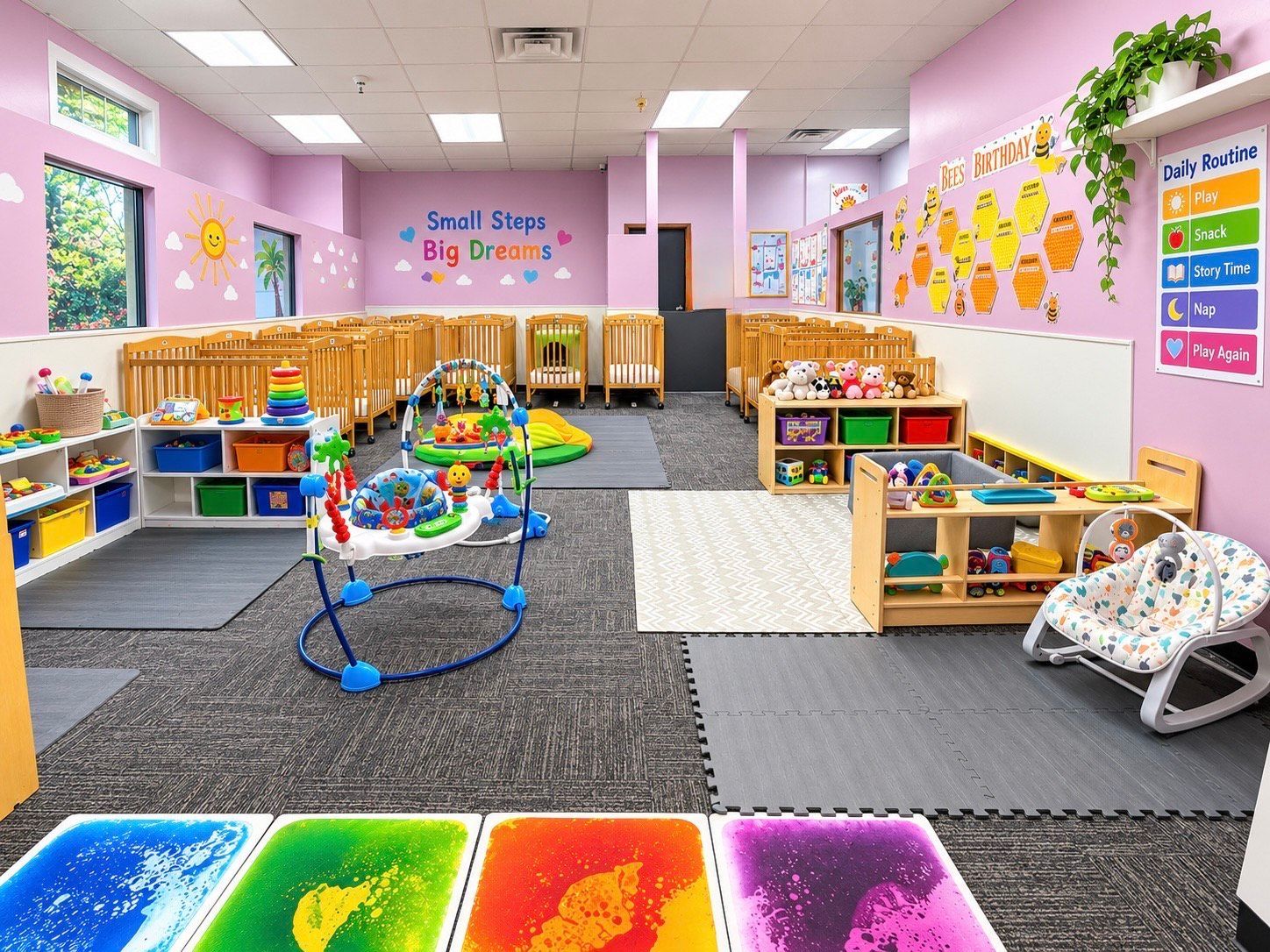

Finding the right daycare in Spring Lake Park can take time, especially when you are looking for more than a convenient place for your child to spend the day. Parents want to know that their children are safe, comfortable, learning, and surrounded by people who genuinely care about them. Location matters, but so do the people, programs, routines, and environment inside the childcare center. When all of these pieces come together, families can feel confident about their childcare decision. At Little Bee’s Child Care Center, we know that choosing a childcare center is a personal decision for every family. We have been privately owned and operated since 2005, and under our current ownership, we continue to focus on providing a safe, nurturing, and engaging environment for children. Our goal is to create a place where children can build confidence, develop important skills, and enjoy coming to daycare each day. For families searching for quality daycare in Spring Lake Park, finding that combination of care and learning can make all the difference.

Choosing a daycare or preschool is a major decision, especially when you are preparing to leave your child in someone else’s care for the first time. You may have questions about safety, teachers, daily routines, learning activities, meals, schedules, and what happens when your child needs extra comfort. That is completely normal. Asking the right questions before enrolling can help you understand what a childcare center offers and whether its approach matches what your family needs. At Little Bee’s Child Care Center, we believe parents should feel comfortable asking questions before making an enrollment decision. A childcare program should be more than a convenient place to spend the day. It should provide a safe, nurturing environment where children can learn, develop relationships, become more independent, and feel comfortable being themselves.

Choosing a childcare center is one of the biggest decisions parents make during their child's early years. Beyond finding a convenient location or a program that fits your schedule, you want to know your child will be safe, supported, and genuinely cared for every day. That is why taking a tour of a childcare center is one of the most valuable steps in the decision-making process. A tour gives you the opportunity to observe the environment, meet the staff, and ask questions that can help you determine whether the center is the right fit for your family. At Little Bee's Child Care Center, we encourage every family to ask questions and explore our classrooms before enrolling. We believe parents should feel informed, comfortable, and confident in their childcare choice. The more you understand about a center's safety practices and the people caring for your child, the easier it becomes to make a decision you can feel good about.
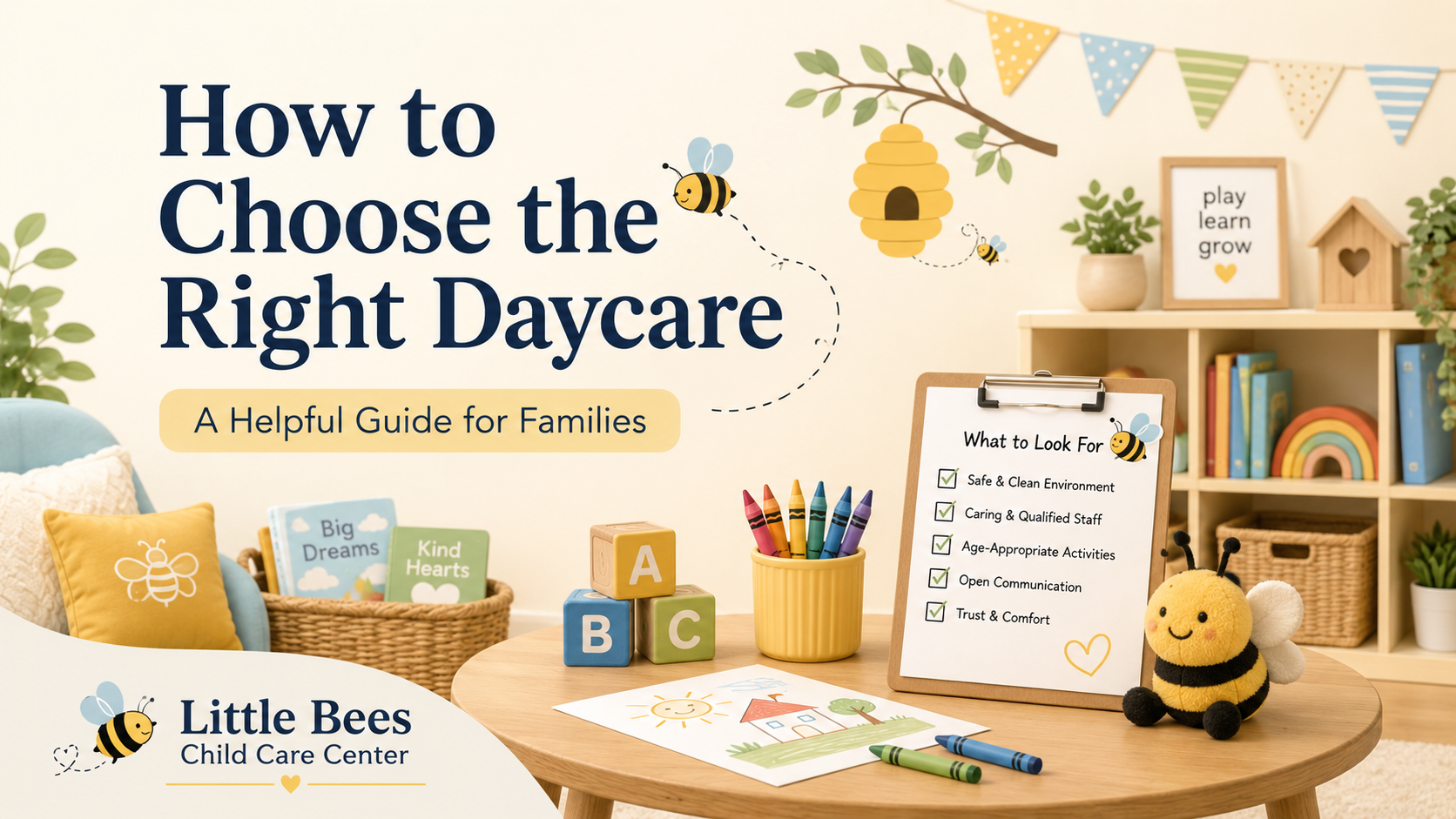
“How to Choose the Right Daycare in Spring Lake Park, MN.”

Finding quality childcare is one of the biggest priorities for parents, but it can also be one of the largest expenses in a family budget. Many parents feel caught between wanting the best possible care for their child and staying within financial limits. The good news is that affordable childcare does not have to mean sacrificing quality, safety, or educational opportunities. With the right approach, families can find childcare solutions that meet both their child's needs and their budget. At Little Bee's Child Care Center, we understand that childcare costs are an important consideration for families. Parents deserve transparency, flexibility, and guidance when exploring childcare options. By understanding what affects childcare costs and knowing what to look for, you can make a confident decision that benefits both your child and your finances.

Childcare Transportation to Spring Lake Park Schools: How Working Parents Are Finally Making It Work
There's a version of the school morning that goes smoothly. Backpacks are packed the night before. Breakfast happens without incident. Shoes are found on the first try. Everyone gets out the door on time and your kid walks into school calm, fed, and ready. And then there's the version most working parents actually live. The alarm goes off and you're already doing mental math. If drop-off is at 7:45, and your shift starts at 8:00, and the school is twelve minutes from your office — that math doesn't work. It's never worked. And yet here you are again, trying to solve the same unsolvable equation before you've even had your first cup of coffee. For parents in Spring Lake Park and the surrounding communities, the logistics of getting kids to school while also showing up reliably to work is one of the most persistent daily stressors there is. It's not just about being busy. It's about the very real gap that exists between when you need to be somewhere and when the school doors actually open. That's the gap that Little Bee's Child Care Center was built to fill. The Hidden Logistics Problem No One Talks About Enough When parents start searching for childcare, the conversation usually centers on infants and toddlers. Which center has the best infant program? What's the teacher-to-child ratio for the two-year-old room? Those are important questions — but the logistics challenge doesn't disappear once your child starts school. In a lot of ways, it gets more complicated. Elementary school schedules are built for a world where someone is available to handle drop-off at 8:30 AM and pickup at 3:00 PM. That world doesn't match the reality for most working families. Schools close for weather. Early release days pop up on the calendar. Teacher conference days mean no school on a Thursday when both parents work full-time. And every single day, there's the question of who handles the hours between when you leave for work and when the school building actually opens its doors. This is the childcare transportation problem — and it's one of the most common reasons parents in Spring Lake Park and communities like Blaine, Fridley, and Mounds View reach out to centers like Little Bee's. What "Childcare with Transportation" Actually Means for Your Family The phrase "childcare with school transportation" sounds like a practical logistics feature. And it is. But the lived experience of it is something bigger — it's what actually allows a parent to go to work without the low-level dread of wondering whether the handoff is going to work today. At Little Bee's Child Care Center , the before and after school care program is designed specifically around the reality of working parents' schedules. Kids arrive at the center in the morning, spend time in a structured, supervised environment before school hours begin, and then Little Bee's provides transportation to local Spring Lake Park schools when it's time. After school, the process runs in reverse. Instead of leaving your child to figure out an unsupervised gap, or relying on the same neighbor who's covered for you seventeen times already, your child comes back to Little Bee's. Homework support, a snack, activities, and a safe, familiar environment — until you're ready to pick them up. For a lot of families, this single logistical solution untangles something they've been working around for years. Why Before-School Care Matters Just as Much as After-School Care Most conversations about school-age childcare focus on the afternoon. After school care gets most of the attention because 3:00 PM is obviously a problem when most workdays don't end until 5:00. But the morning gap is just as real — and it catches families off guard more often than the afternoon one does. Elementary schools in Spring Lake Park typically don't open their doors to students until 7:30 or 7:45 AM. If your workday starts at 7:00 or 8:00, depending on your commute, that window is either extremely tight or completely impossible to manage on your own. Little Bee's opens at 5:30 AM every weekday morning . That's not a typo. While most childcare centers in the north metro aren't even unlocked until 6:30 or 7:00, Little Bee's has been welcoming early arrivals since 2005. Kids who need to be there at 6:00 AM because a parent works an early shift aren't scrambling for a solution — they have a warm, staffed, safe place to start their morning. Before school care at Little Bee's isn't just supervised waiting. The mornings are structured and calm. Kids ease into the day with activities, breakfast options, and the comfort of a routine they know. By the time transportation takes them to school, they've already had a good morning — which means they walk into the classroom ready, not rattled. What the After-School Hours Actually Look Like Here's something worth knowing about how Little Bee's approaches after-school care: it's not an afterthought. The afternoon program has the same intentionality as every other part of the center's day. When kids arrive back at Little Bee's after school, the afternoon is built around a few core things: Homework Support This doesn't mean a staff member sitting next to your child doing the math for them. It means a structured, low-distraction time built into the schedule where kids can actually sit down and work through their assignments with support available if they need it. Kids who finish homework before pickup are ahead of the evening rush before dinner — which any parent knows is a small but meaningful gift. Real Snacks After a full school day, kids are hungry. Little Bee's provides afternoon snacks, so your child isn't arriving home on an empty stomach and crashing by 5:30 PM. Structured Activities and Free Play The balance here is important. Kids who've been in a structured school environment all day need room to decompress. Little Bee's afternoon programming gives them organized activities alongside genuine free play time — which is exactly the kind of balance that developmental experts consistently recommend for school-age children. A Familiar, Trusted Environment This one matters more than the logistics. Your child knows the teachers. They know the space. They have friends there. After-school care at a place that feels safe and familiar is categorically different from after-school care that feels like a holding pen. Kids pick up on that difference immediately — and so do parents when they see how their child feels about going. The Before & After School Care Gap Nobody Prepares You For There's another version of this problem that doesn't come up until you're already living it: the in-between years. Your youngest is finally done with full-time daycare and starting kindergarten. You breathe a sigh of relief because full-day childcare costs are finally behind you. And then reality sets in — kindergarten ends at 3:00 PM, your office is 25 minutes away, and you genuinely do not know how you're going to handle this. School-age childcare in the north metro isn't as easy to find as infant or preschool care. A lot of centers stop accepting children once they start elementary school, which leaves families scrambling for options right at the moment when they expected things to get easier. Little Bee's accepts school-age children through age 12, which means the before and after school care program grows with your family. You're not starting over and finding a new solution every few years. The center that your child knew as a toddler, or that their younger sibling still attends, is the same place they come back to after school. That continuity is genuinely underrated — for the child and for the parent. Serving Spring Lake Park and the North Metro Little Bee's Child Care Center is located at 1630 County Hwy 10 #3 in Spring Lake Park , which puts it right in the heart of the communities it serves. Families from Blaine, Fridley, Mounds View, and Coon Rapids regularly use the center, and the before and after school transportation service makes it practical for families whose school-age children attend Spring Lake Park area schools. If you're not sure whether the transportation service covers your child's school, the best move is to call directly and ask. The center's director can walk you through the specifics of how transportation works, which schools are covered, and what the logistics look like day to day. What Parent Aware Rated Actually Means If you see "Parent Aware Rated" on a childcare center's website and you're not sure what it means, here's the quick version: it's Minnesota's quality rating system for childcare providers, run through the Minnesota Department of Human Services. Centers that carry this rating have been evaluated across multiple dimensions — staff qualifications, learning environment, family partnerships, and child assessment practices. Not every licensed childcare center in Minnesota goes through this process. It requires an active commitment to quality evaluation and ongoing improvement. Little Bee's has earned and maintained this rating, which means families aren't just taking the center's word for it that the quality is there — an independent system has assessed it. For parents choosing before and after school care, the Parent Aware rating is a meaningful data point. It tells you that this isn't a center coasting on reputation. It's one that's been held to external standards and met them. Family-Owned Since 2005 — And Why That Still Matters for School-Age Kids There's a version of school-age childcare that's purely logistical. Drop your kid off, pick them up, make sure nobody got hurt in between. It works, technically. And then there's the version where the person running your child's after-school environment actually knows your kid — knows that they had a rough week, knows they prefer the building blocks to the art supplies, knows to give them ten minutes of quiet before jumping into homework time. That second version is what a family-owned center with twenty years of community roots provides. Little Bee's has been privately owned and operated since 2005. The staff build real relationships with the families they serve. When your school-age child comes back to Little Bee's after a hard day at school, they're walking into a place where people genuinely know them. That's not something you can franchise. How to Get Your Child Enrolled If you're a working parent in Spring Lake Park, Blaine, Fridley, Mounds View, or Coon Rapids and you're figuring out school-year childcare — or trying to solve the transportation problem before the school year gets away from you — Little Bee's Child Care Center is the place to start. Enrollment is open for the before and after school care program, and the best way to see whether it's the right fit is to schedule a tour and talk through your specific situation with the team. 📍 1630 County Hwy 10 #3, Spring Lake Park, MN 55432 📞 (763) 780-0187 📧 info@littlebeeschildcare.com 🕠 Open Monday–Friday, 5:30 AM – 6:00 PM Schedule a Tour → The school year moves fast. The families who have this figured out before September even starts are the ones who didn't wait until it became a crisis.

Finding childcare that fits your family’s schedule can feel overwhelming, especially when every household has different needs. Some parents need care five days a week, while others only need a few hours during the workday or help around school schedules. That is why flexible childcare options have become so important for modern families. The right program should support not only your child’s development but also the rhythm of your daily life. At Little Bee’s Child Care Center, we understand that flexibility matters. Families today balance work, school, activities, appointments, and changing schedules, and childcare should help make life easier, not more stressful. Whether you are looking for part-time care, full-time enrollment, or before and after school programs, understanding your options can help you choose the best fit for your child and your family.

Finding the right daycare is not just about proximity or availability. It is about finding a place where your child feels safe, understood, and genuinely cared for. For many parents, the goal is simple but powerful: to find a daycare that feels like an extension of home. That sense of comfort can make all the difference in how a child adjusts, learns, and grows. At Little Bee’s Child Care Center, we understand that this decision carries both emotional and practical weight. Families are not just choosing a service, they are choosing a daily environment that shapes their child’s early experiences. Knowing what to look for can help you move forward with clarity and confidence.

Best Early Morning Drop-Off Daycare in Spring Lake Park, MN | Open at 5:30

Choosing the right childcare for your family is one of the most important decisions you will make. Parents want to ensure that their children are cared for in a safe, nurturing, and structured environment. One of the key ways to evaluate a center is by checking its licensing and accreditation. Licensed childcare services provide parents with peace of mind, and at Little Bee’s Child Care Center, we prioritize both compliance and quality care. Accreditation and licensing are more than just paperwork—they are indicators that a center meets specific standards for safety, staff qualifications, and program quality. Understanding these standards helps families make informed decisions while ensuring children have the best possible start in life.